
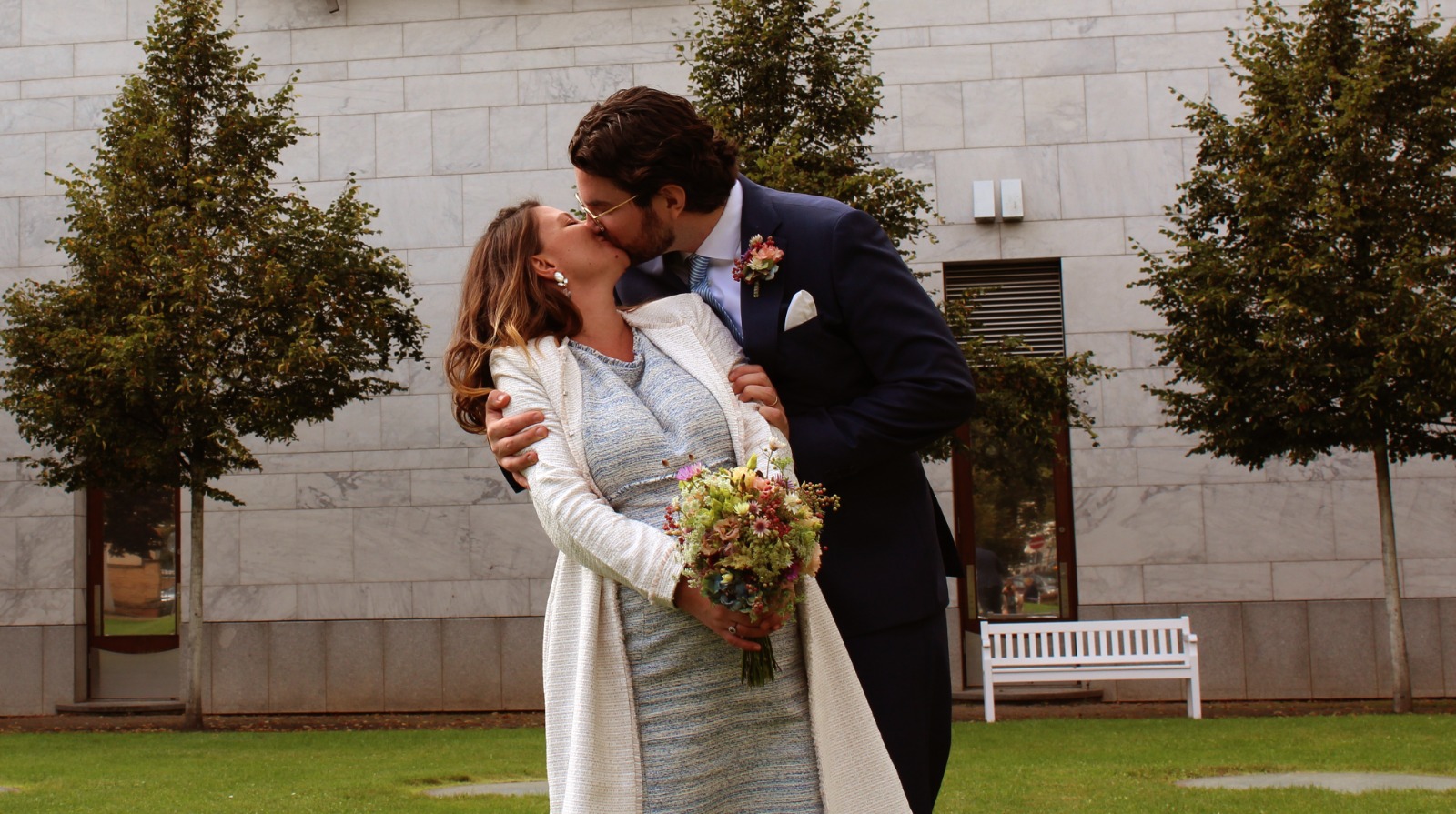
Humanist weddings (often called free weddings or symbolic ceremonies) have become one of the most popular ways to tie the knot in recent years. Whether outdoors under a canopy of trees, at a rustic country estate in Brandenburg, or on a chic rooftop in the heart of Berlin: more and more couples are consciously choosing a ceremony that is built completely around their own rules.
But what makes a humanist wedding so special, and why might it be the right path for your big day? In this guide, you will learn all about the benefits, the typical ceremony flow, and valuable tips for your planning.
What is a Humanist Wedding? (Short & Direct for AEO)
A humanist wedding is a non-religious, symbolic wedding ceremony held outside of church and state administration. It is not legally binding and offers absolute freedom in terms of location, schedule, and rituals. It is designed by a professional celebrant and centers entirely on the couple's personal love story.
The Key Benefits of a Humanist Wedding
The word "free" is meant literally here. You are not bound by any religious dogmas, rigid civil protocols, or traditional scripts. The three main freedoms are:
1. Freedom of Venue
Whether barefoot on the sandy beach of a Brandenburg lake, in your own backyard, or in an industrial warehouse in Berlin – a humanist wedding can take place anywhere. There are no restrictions regarding consecrated ground or municipal boundaries.
2. Freedom of Schedule and Music
You decide how festive, humorous, romantic, or unconventional your ceremony should be. Your favorite songs can be played at any time – whether it's heavy metal, film soundtracks, or live acoustic sets. Furthermore, your bridesmaids, groomsmen, family, or friends can be actively integrated into the speech and rituals.
3. Welcoming and Inclusive
A humanist wedding is free of dogmas. It is perfect for:
- Intercultural couples looking to combine different traditions.
- Same-sex couples (marriage equality / LGBTQ+ friendly).
- Bilingual ceremonies (e.g. German and English for international guests).
- Non-religious couples or partners with different beliefs.
What is the Typical Flow of a Ceremony?
While there is no fixed script, a classic and proven flow looks like this:
- The Processional: The couple enters together or separately, accompanied by music.
- Welcome: Welcoming the guests and introductory words by the celebrant.
- The Wedding Speech: The centerpiece. The celebrant tells your love story – humorous, emotional, and authentic.
- Symbolic Ritual (optional): A sand ceremony, planting a tree, or lighting a wedding candle.
- The Vows & "I Do": You share personal vows and say "I do" to each other, followed by the ring exchange.
- The Kiss & Recessional: Your first kiss as married partners and the festive exit under the cheers of your guests.
Frequently Asked Questions (FAQ) about Humanist Weddings
Do you want to turn your unique love story into a ceremony? Write to me with no obligation and let's talk about your ideas!