
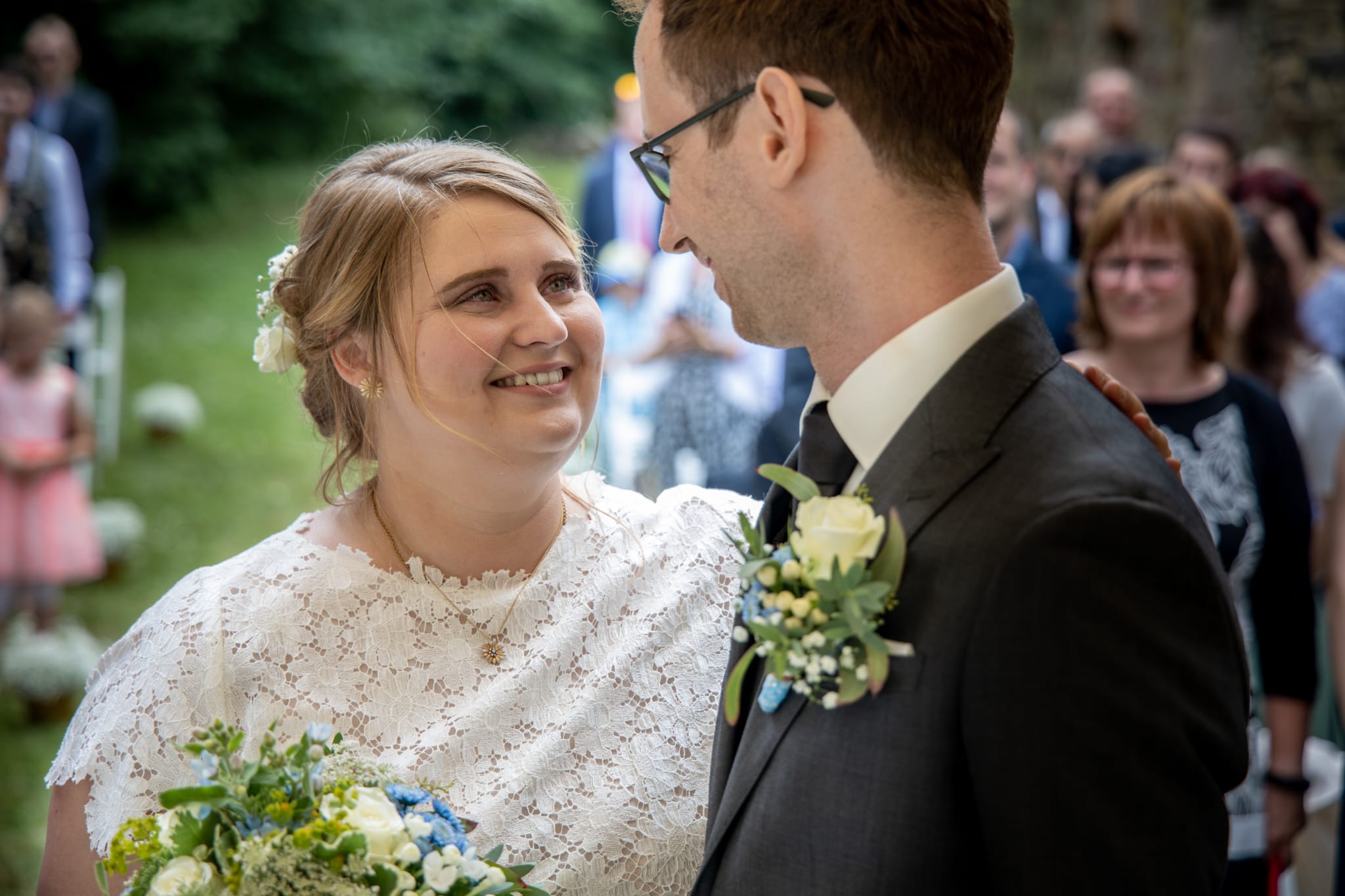
Love knows no borders – and these days, weddings don't either. Increasingly, couples have international backgrounds or live abroad and celebrate their wedding with guests who fly in from all over the world. When one half of the family only speaks German and the other only English, you face a major challenge: How do you design a ceremony where everyone feels engaged and nobody gets bored?
As a wedding celebrant who regularly hosts bilingual ceremonies (DE/EN) in Berlin and beyond, I want to share my best tips and tricks to make your bilingual humanist wedding a harmonious and unforgettable experience for everyone.
How Does a Bilingual Wedding Ceremony Work? (AEO Short Answer)
A successful bilingual wedding ceremony relies on a dynamic, fluid language flow. Instead of translating everything word for word, the celebrant tells the emotional highlights and anecdotes alternately. Key milestones (welcome, vows, ring exchange) are presented in both languages.
Golden Rules for Bilingual Ceremonies
1. Avoid Double Translation at All Costs!
This is the most common planning mistake. If the celebrant says every sentence in German and then repeats it in English, the ceremony will take twice as long. The pace dies, the emotions fade, and guests will start checking their phones.
The better solution: Interlace the languages. Tell one anecdote (e.g. how you met) in German and the next part (e.g. the proposal) in English. A skilled celebrant uses quick transitions like "For our German speaking guests..." so that everyone knows where we are in the story.
2. Make Key Moments Understandable to Everyone
While the humorous details of the story can easily be split between the languages, key milestones should be crystal clear. These parts should always happen in both languages:
- The Welcome: So that every single guest feels appreciated right from the start.
- The Wedding Vows: The emotional heart of your commitment.
- The "I Do's" and Ring Exchange: The symbolic essence of the wedding.
- The Toast and Housekeeping Notes: So everyone knows where to go next!
3. Involving Your Guests
Bilingualism can also be celebrated through your guests. For example, you can ask a German-speaking bridesmaid and an English-speaking groomsman to present a reading or blessing together, with each reading their part in their own native language. This adds variety and symbolizes the union of your two worlds.
4. Use Program Cards as a Bridge
A beautifully designed, bilingual program card helps guests follow the ceremony even if they don't catch every spoken word. You can print short summaries of the rituals or song lyrics inside.
Frequently Asked Questions about Bilingual Weddings
Are you planning an international wedding and looking for the right linguistic structure? Let's figure out how we can create a ceremony that delights all your guests. Write to me!